
How Businesses Use Kubota Equipment to Increase Productivity (Without Paying for Downtime)
Posted 4/4/2026
Productivity on a jobsite is not a motivational poster. It is hours on the clock, jobs closed out, and customers who call you back next season.
We see the same thing across Northeast and Eastern Ohio: one breakdown, one wrong attachment, or one machine that is a size off can turn a “two day” job into a week of scrambling.
This guide lays out how businesses use Kubota equipment for businesses to keep crews moving, reduce rework, and protect uptime. No fluff, just what works in the real world.
Productivity problems we see on Ohio jobsites every week
Downtime hits schedules, cash flow, and reputation
When a machine goes down, you pay twice: once for the repair, then again for the stalled job. Crews still need paid, subs get delayed, and your customer is watching the calendar.
That is why Kubota equipment productivity is not only about speed, it is about predictable uptime backed by service.
The wrong size machine slows everything down
Too small and you take extra passes, overload the machine, or fight traction all day. Too big and you cannot fit, tear up turf, or spend more than the job can justify.
Right-sizing is where most “productivity problems” actually start.
Parts and service delays turn a small issue into a lost week
A worn hose, a leaking fitting, or a damaged cutting edge should be a quick fix. If parts are on backorder and service is booked out, that “quick fix” turns into downtime you cannot schedule around.
The productivity playbook: match the machine, the attachments, and the support
Start with the work, not the model number
Commercial buyers tend to shop model-to-model online. We get it, everyone wants to compare specs. The faster path is this: define the work first.
Primary jobs: grading, trenching, mowing, snow, material handling
Jobsite conditions: soft ground, hills, tight gates, paved surfaces
Cycle time goals: how fast you need to load, haul, and finish
Transport limits: trailer capacity, CDL needs, job-to-job moves
Once the work is clear, picking the right Kubota platform gets simple.
Build a one-machine, many-jobs setup with attachments
The best equipment to increase productivity on a jobsite often looks like this: one dependable machine with the attachments that let it earn money in more seasons.
Attachments do two things for productivity:
They reduce hand labor and rework by doing the finish work right the first time.
They cut changeover time by letting one operator handle more tasks without waiting on another machine.
Plan for uptime like it is part of the bid
Uptime is not luck. It is maintenance planning, wear parts on hand, and a dealer who answers the phone when it is ugly.
If you run commercial Kubota equipment, treat support like part of the fleet, not an afterthought.
Where commercial Kubota equipment saves time on real jobs
Landscaping and property maintenance: more done per pass
Landscaping crews win or lose on how many times they touch the same area. Kubota compact tractors, utility tractors, and mowers help reduce those extra trips.
Finish mowing and rough cutting: cleaner cut, fewer slow-downs, less frustration in heavy grass.
Material handling: moving mulch, stone, pallets, and plants without a “four guys and a wheelbarrow” plan.
Grading and cleanup: box blades, land planes, and grapples speed up the last 10 percent that customers notice most.
Construction and excavation support: faster material handling and site prep
Not every contractor needs a full-size wheel loader or dozer to be productive. Many jobs are won on smart, compact support equipment that shows up on time and does the dirty work.
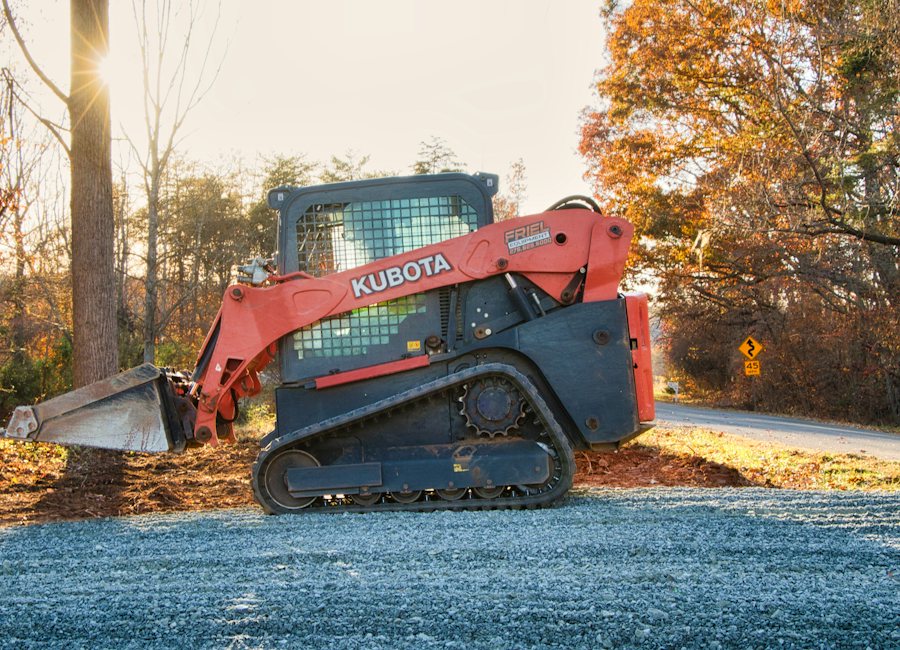
Skid steers and compact track loaders: fast loading, backfilling, and cleanup, especially when paired with the right bucket or grapple.
Compact excavators: trenching, footers, drainage, and utility work in tight spaces with less site damage.
Utility tractors: moving materials, pulling, mowing, and running PTO-driven attachments across mixed sites.
Municipal work: predictable schedules and safer operation
Municipal crews need equipment that starts, runs, and keeps the schedule honest. Kubota’s commercial lineup is a fit for parks, road departments, and facilities teams because the machines are practical, serviceable, and easy to train on.
Seasonal versatility: mowing in summer, snow work in winter with the same base machine.
Operator-friendly controls: less training time, fewer mistakes, safer work habits.
Supportable fleets: consistent parts and service planning across multiple units.
Kubota tractors for commercial use: what actually drives productivity
Right-size horsepower and weight for traction and stability
Horsepower sells tractors. Weight and traction make them work.
For Kubota tractors for commercial use, productivity usually improves when the tractor is heavy enough to put power to the ground, and sized to lift and carry what you handle daily. That often means considering ballast, tire choice, and loader capacity, not just engine HP.
Cab comfort and controls reduce operator fatigue
Fatigued operators slow down, make sloppy grades, and have more close calls. A comfortable station, good visibility, and intuitive controls keep pace steady through a long day.
That is a quiet productivity gain that shows up on every job, especially during seasonal rush.
Quick attach and hydraulic capacity: the make-or-break details
If your attachment swaps take forever, you stop swapping. Then the machine is not as versatile as you paid for.
Look at:
Quick-attach systems: faster changes, less downtime between tasks.
Hydraulic flow and remotes: the difference between “it runs” and “it runs well.”
3-point and PTO match: making sure implements fit and perform as intended.
Equipment to increase productivity on a jobsite: 8 high-impact attachment combos
These are common pairings that make Kubota equipment for contractors earn its keep across seasons. The right combo depends on your soil, your crews, and the kind of finish your customers expect.
Utility tractor combos
Loader + pallet forks: quick unloading, moving bundles, staging materials safely.
Box blade or land plane: faster driveway work, fewer passes, cleaner finish.
Rear mower or rotary cutter: keeps properties under control without beating the machine up.
Skid steer and compact track loader combos
General purpose bucket + tooth bar: better digging bite, quicker load cycles.
Grapple: storm cleanup, brush handling, demo debris, less hand labor.
Snow pusher or blade: higher throughput on lots and drives during winter contracts.
Compact excavator combos
Trenching bucket + grading bucket: dig clean, then finish clean without wrestling the cut.
Hydraulic thumb: handling rock, logs, and debris with control, less repositioning.
The hidden cost of downtime, and how to shrink it
Preventive maintenance that pays off fastest
If you want better Kubota equipment productivity, start with the simple stuff your crew can do on schedule.
Daily walk-around checks: leaks, pins, tire or track condition, loose hardware.
Greasing intervals: pins and bushings last longer, machines stay tighter.
Air filtration attention: dusty work kills performance and shortens engine life.
Cooling system cleaning: plugged coolers turn into overheating and lost hours.
Wear parts and fluids to keep on the shelf
Some downtime is optional. Keeping common items on hand makes small problems stay small.
Filters and fluids: oil, fuel, hydraulic filters, plus the correct fluids.
Cutting edges and teeth: buckets that bite are faster and safer.
Hoses and fittings: one blown hose should not end the day.
Service access matters as much as the machine
Every brand can have a bad day. The difference is how fast you get back to work.
Before you buy Kubota commercial equipment, look at the dealer’s parts depth, service capacity, and communication habits. A great machine with slow support still costs you money.
Fit-for-job checklist before you buy commercial Kubota equipment
Questions to answer about your jobsites and workflow
What is the heaviest load we move weekly, not occasionally?
How tight are our access points, gates, and trailer constraints?
What ground conditions do we work on in spring and after rain?
Which attachments will live on the machine most of the time?
Do we need a cab for comfort, dust, and winter work?
Questions to ask your dealer (the ones that prevent regret)
What is your realistic service turnaround during peak season?
Which parts do you stock locally for this model and its attachments?
Can you help us right-size the machine for our typical jobs, not our biggest job?
Do you offer delivery and on-site service if we cannot spare a driver?
Who do we call when something breaks, and will it be the same faces next time?
Why local support changes the math for Kubota equipment productivity
We are a Kubota dealership, so we are biased toward the brand. Here is the part that matters just as much as the paint color: support close to the jobsite.
Straight answers on sizing and attachments
We listen first, sell second. That means talking through your jobs, your trailer, your crew, and your timeline before we point at a model on the lot.
It keeps you from buying a machine that looks good on paper and disappoints on Monday morning.
Parts, service, and hydraulic hose building under one roof
Our shop and parts department are built around uptime. We keep common parts moving, and we build hydraulic hoses in-house, which can cut the wait when a hose failure would otherwise park the machine.
If you have ever lost half a day chasing a hose, you already understand the value.
Delivery and on-site service for busy crews
Some weeks you cannot spare a driver or a trailer. Delivery and on-site service can be the difference between finishing a job on schedule and explaining delays to a customer who does not want to hear it.
Next step: spec the right Kubota setup for your business
If you are shopping Kubota equipment for businesses, we are happy to help you spec a setup that matches your work and protects uptime. No pressure, just straight answers.
Bring your typical job list: the work you do every week, not your once-a-year outlier.
Bring your transport details: trailer capacity, tie-down points, and travel distances.
Stop by Unkefer Sales in Minerva, Ohio, or call and talk it through. We will help you get the right machine, the right attachments, and the support to keep it earning.
Ready to take the next step?
Contact our knowledgeable sales team to get more information on Kubota equipment.
More from Business
How the Right Equipment Saves Local Ohio Businesses Time
When the phone’s ringing and the weather finally cooperates, time becomes the real currency.
Read More BusinessLabor Is Tight. Equipment Has to Work Harder.
Running a business is never simple, but the last few years have made one thing very clear: time, labor, and efficiency matter more than...
Read More BusinessHow Can Landscaping Companies Control Rising Operating Costs?
If you’re running crews across Stark, Carroll, or Columbiana County, you’re living in the squeeze.
Read More